Rustic Vintage Kitchen Ideas: Warm Woods and Earthy Tones
Rustic vintage kitchens celebrate the beauty of time-worn materials and the comforting glow of natural tones. They pair the durability of traditional craftsmanship with a relaxed, lived-in charm that makes cooking and gathering feel like a warm, slow-breathed ritual. Here are ideas to help you craft a kitchen that feels both rustic and timeless, with an emphasis on warm woods and earthy hues.
Core design principles
– Patina over perfection: The appeal lies in subtle marks, creases on a butcher block, and softly aged hardware. Let imperfection tell the story of the space.
– Texture-rich layers: Mix wood, stone, brick, and textile textures to create depth. Rough-hewn surfaces, hammered metal, and woven fabrics soften harder materials.
– Warmth as a foundation: Ground the room with wood tones and earthy colors, then bring in small doses of contrast through textiles or a single accent color.
– Function with character: Choose practical pieces that look lived-in. A well-worn butcher block, a farmhouse sink, and sturdy open shelving reinforce the vintage vibe without sacrificing modern convenience.
Color palette ideas
– Base neutrals: Creamy whites, soft ivory, and warm beige create a timeless backdrop that makes wood tones pop.
– Warm woods: Walnut, maple, cherry, and oak provide different degrees of depth. Let the grain be a feature by selecting finishes that highlight it rather than conceal it.
– Earthy accents: Terracotta, clay, sage greens, olive, and ochre anchor the room in nature. Use these hues on walls, tile, or fabric to create cohesive zones.
– Small pops: Copper, brass, or aged bronze hardware and lighting add a vintage glow without overpowering the palette.
– How to apply: Paint walls in a warm neutral, install wood cabinets or shelving with weathered finishes, and choose stones or tiles in earthy tones for the backsplash and floor. If you prefer all-wood cabinetry, vary the wood species and finish within the same family to keep the look cohesive.
Materials and surfaces
– Countertops: Butcher block is the quintessential rustic choice for warmth and practicality. Alternatives include soapstone or leathered granite for a softer, matte look that ages gracefully. Sealing is essential to protect wood countertops from moisture and stains.
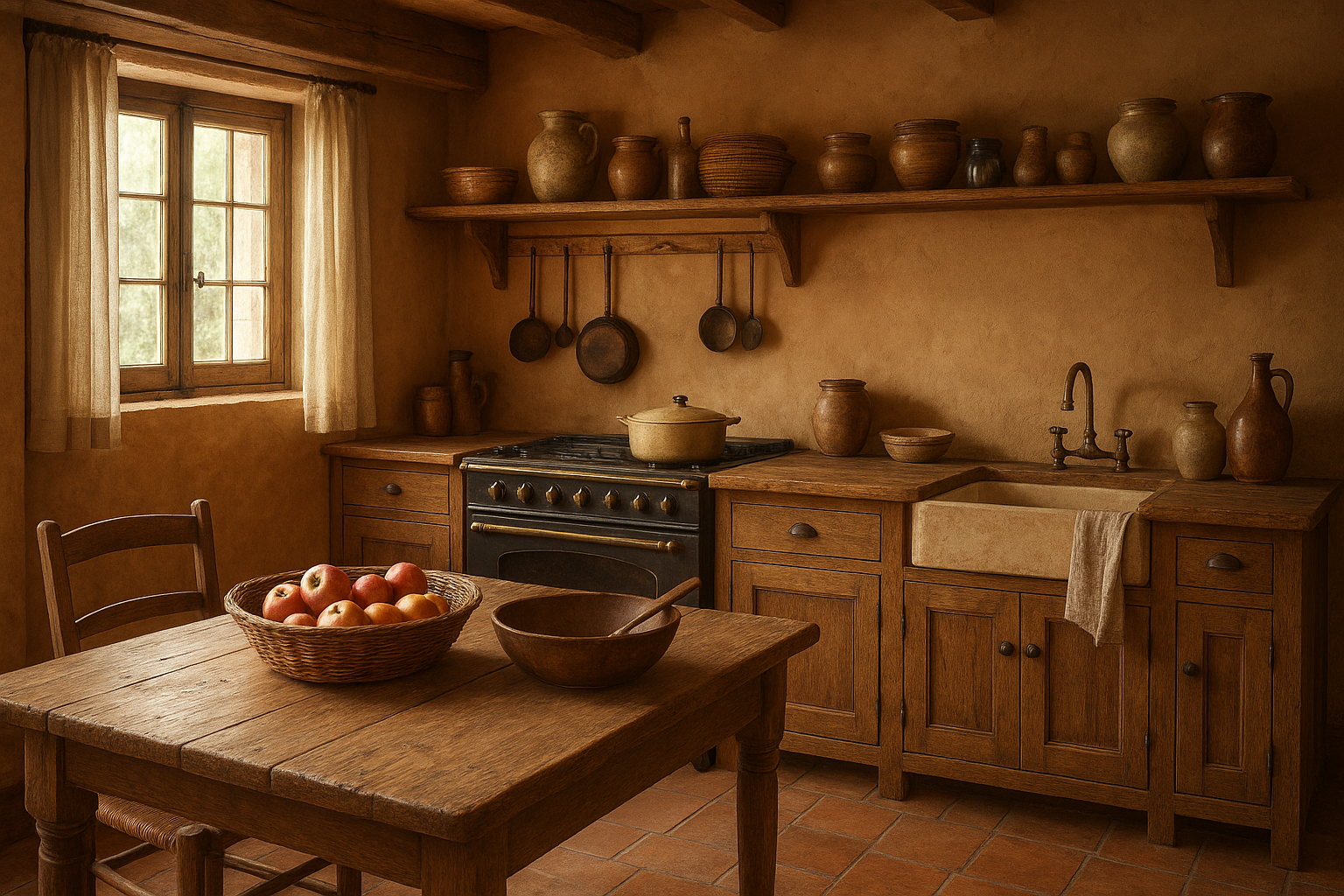
– Cabinets: Reclaimed or distressed wood cabinets carry authenticity. If full wood cabinetry feels heavy, opt for painted bases with natural wood uppers or mix in open shelving to lighten the look.
– Backsplashes: Brick, tumbled stone, or warm-toned subway tiles (cream or ivory with subtle veining) create a textured, vintage feel. A cement or encaustic tile in a geometric or floral pattern can be a striking nod to retro charm.
– Flooring: Wide plank hardwoods in a weathered finish or handcrafted encaustic tiles offer durable warmth. Terracotta or natural stone floors can enhance the earthy vibe while remaining practical.
– Sinks and hardware: A large farmhouse sink in porcelain or cast iron, paired with copper or oil-rubbed bronze fixtures, reinforces the rustic aesthetic and ages beautifully.
Cabinetry and storage ideas
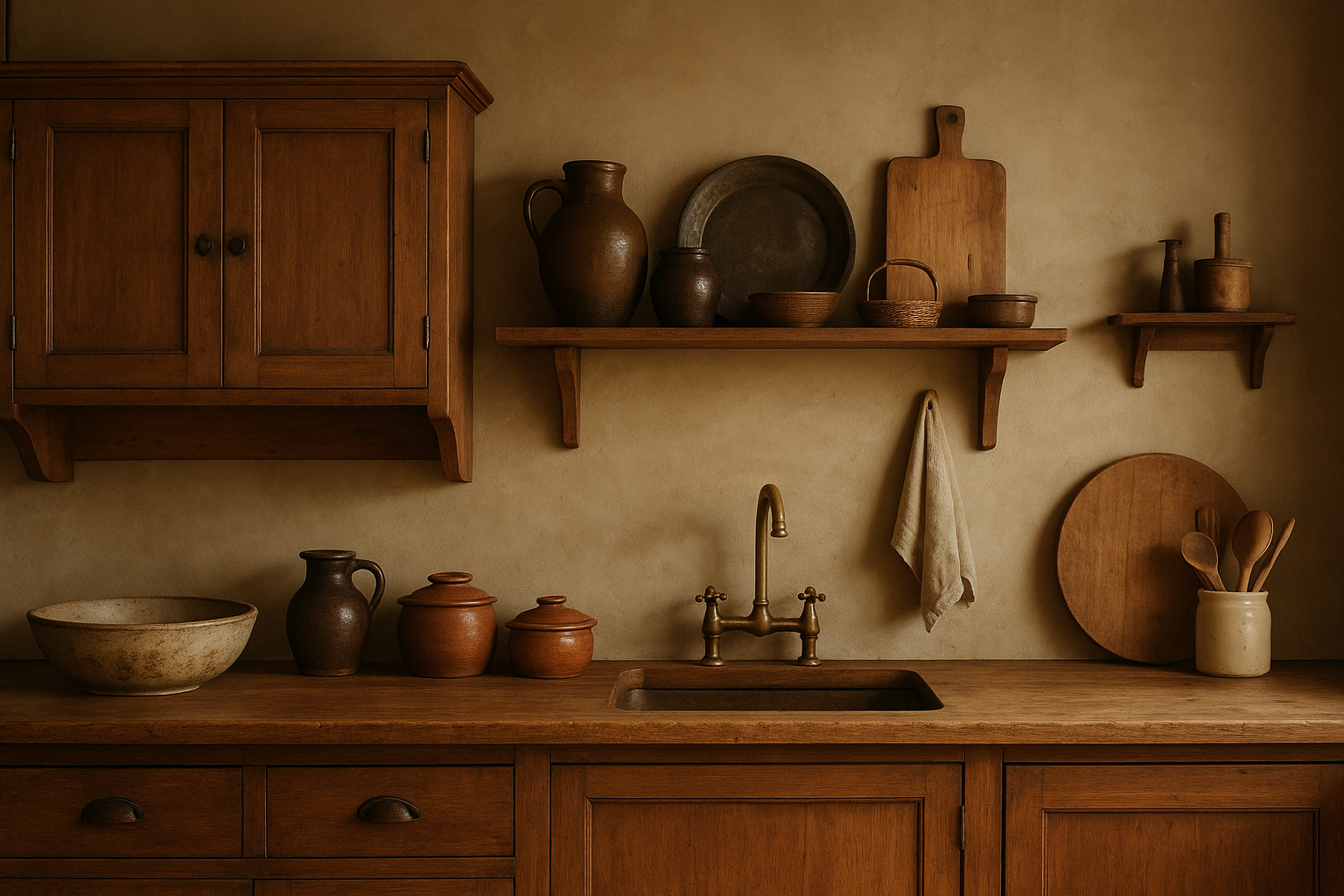
– Open shelving: Reclaimed wood shelves display daily essentials, glass jars, and heirloom dishes. Keep a few curated items on display to avoid a cluttered look.
– Glass-front cabinets: Use glass doors on select uppers to showcase vintage pottery or enamelware, balancing storage with display.
– Hardware details: Vintage-inspired knobs and pulls in brass, copper, or patinated brass tie the room together. Consider mixing metal finishes for a collected-over-time effect.
– Clever storage: Use labeled ceramic canisters, wooden crate organizers, and pull-out spice racks to maintain order while preserving the rustic feel.
Lighting and ambiance
– Warm lighting: Choose warm white bulbs (2700–3000K) to create a cozy glow that enhances wood tones.
– Fixtures: Copper or brass pendant lights over an island or sink evoke vintage charm. A cluster of small glass pendant lights or a single wide-brimmed shade can anchor the room without overpowering it.
– Natural light: Maximize daylight with simple window treatments (linen or cotton shades) that let light filter through while preserving privacy and softness.
Decor and textiles
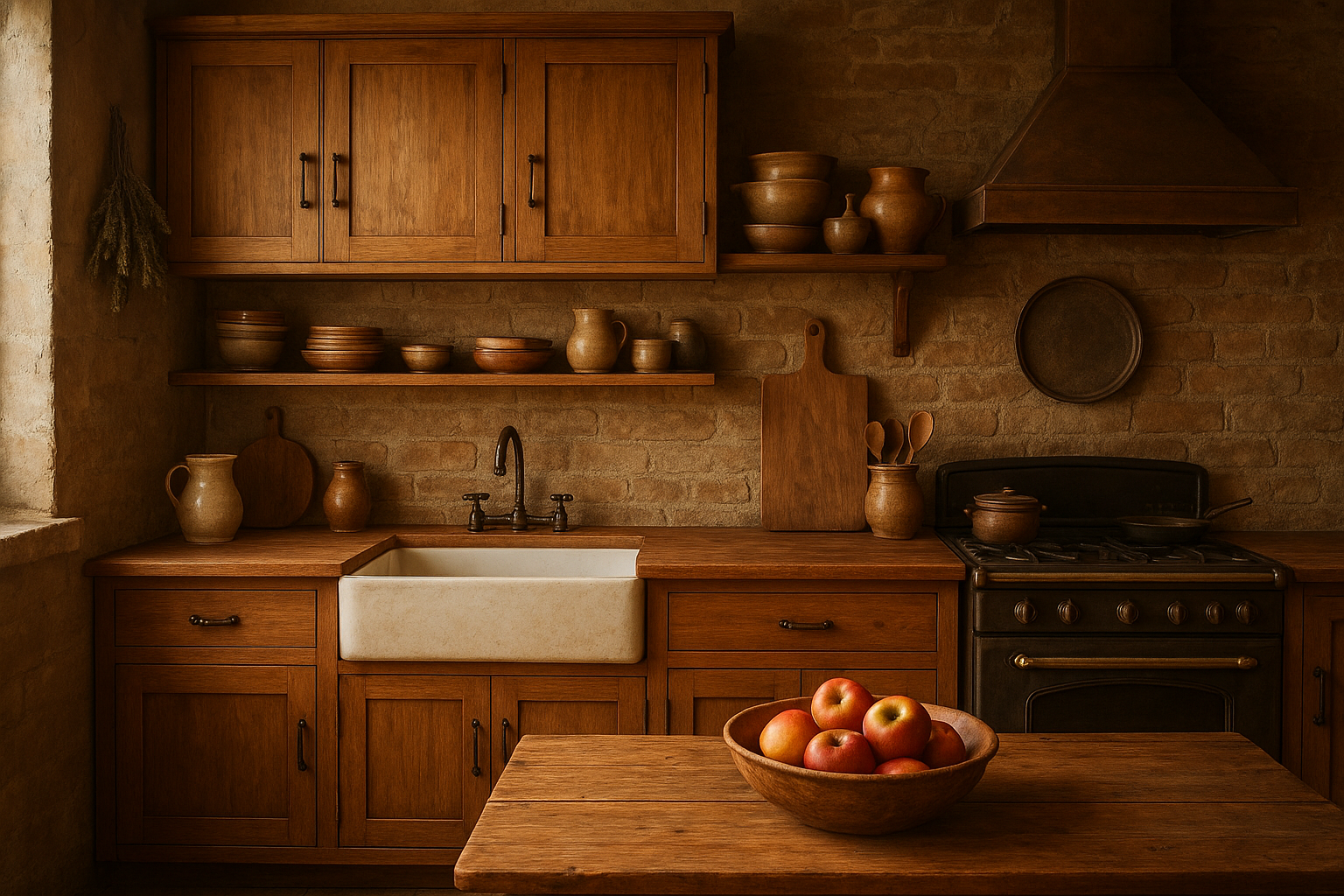
– Copper and enamelware: A few copper pots, a vintage coffee tin, or enamel mugs add authenticity without crowding surfaces.
– Textiles: Linen linens, burlap runners, and cotton dish towels in earthy tones soften the space. A woven rug can define a kitchen dining area and add warmth.
– Plants and pottery: A small herb wall or clay pots with herbs bring life to the kitchen and complement the natural materials.
Practical tips for care and longevity
– Wood surfaces: Regularly oil or wax butcher block countertops to maintain moisture balance and prevent cracking. Wipe spills promptly, use cutting boards for foods with high acidity, and rotate finishes to avoid uneven aging.
– Metal finishes: Clean copper and brass with gentle polish to maintain their warm glow. Avoid abrasive cleaners that can scratch patinas.
– Stone and tile: Seal porous stone or grout lines as recommended by manufacturers to prevent staining. Use pH-balanced cleaners to protect the surface.
– Moisture awareness: Ensure good ventilation to reduce warping of wood cabinets and shelving. Keep moisture away from long-term wood exposures by using splash zones and properly sealed surfaces.
Budget-friendly strategies
– Start with a vignette: Begin with one area—an open shelf setup or a single wood-accented cabinet—and expand gradually.
– Repurpose and refinish: Refurbish an old dresser as a custom pantry or convert a salvaged door into a kitchen island top.
– Mix new with vintage: Pair modern basics (efficient appliances) with vintage-inspired finishes and hardware to achieve the look without a steep price tag.
– Material swaps: If solid wood cabinets are out of reach, choose painted bases with natural wood countertops and a wood-tone open shelf system to achieve a similar feel.
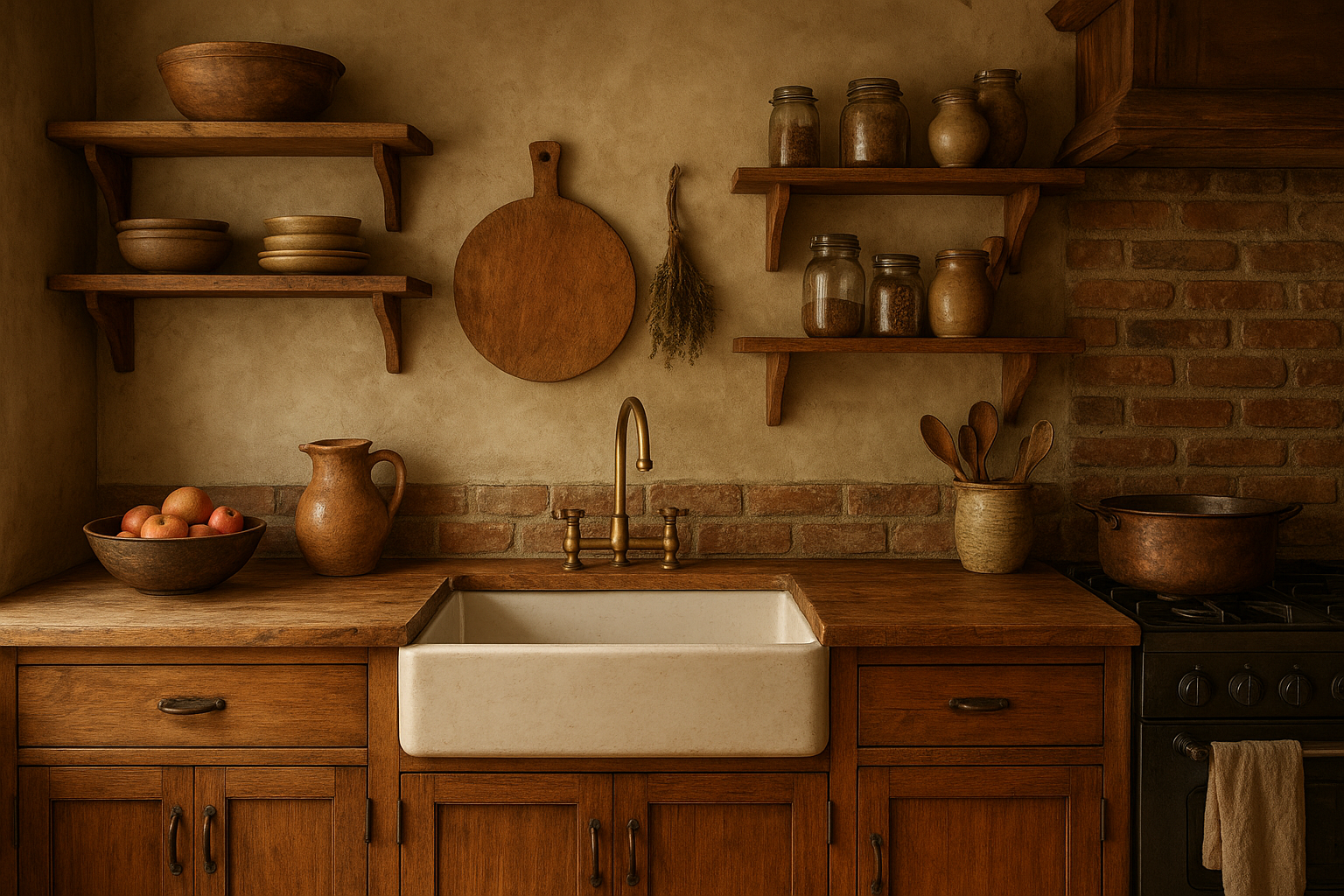
Quick-start plan for a Rustic Vintage kitchen
1) Choose a warm base: Start with cream or ivory walls and a warm wood tone for cabinets or open shelving.
2) Pick a unifying texture: Decide on a countertop material (butcher block or soapstone) and a backsplash (brick or warm subway tile).
3) Add vintage touches: Incorporate copper pots, enamelware, and a farmhouse sink. Use aged brass hardware to tie elements together.
4) Layer lighting: Install warm pendant lights over the island or sink and a comfortable ceiling fixture to create a gentle glow in the evenings.
5) Tone with textiles: Introduce linen textiles and a natural fiber rug to soften the space and enhance the rustic feel.
6) Personalize with heirlooms: Display a few cherished dishes, jars, or a vintage scale to give the kitchen a sense of history.
Inspiration and mood board ideas
– Warm woods + earthy neutrals: Walnut cabinets, a light-beige wall, and a terracotta floor tile create a cohesive natural palette.
– Weathered blues and greens with wood accents: Pair sage cabinetry or shelving with a natural wood island and brass hardware for a seaside-cabin twist.
– Brick and stone textures: A brick backsplash, stone countertops, and aged wood shelves deliver a rugged, artisan atmosphere.
A closing note
A rustic vintage kitchen that celebrates warm woods and earthy tones is less about following a strict template and more about curating materials that tell a story. Let each element—grain, patina, and texture—play a part in shaping a space that feels welcoming, practical, and forever usable. By balancing authenticity with comfortable practicality, you can create a kitchen that looks like it’s always been a cherished part of your home.