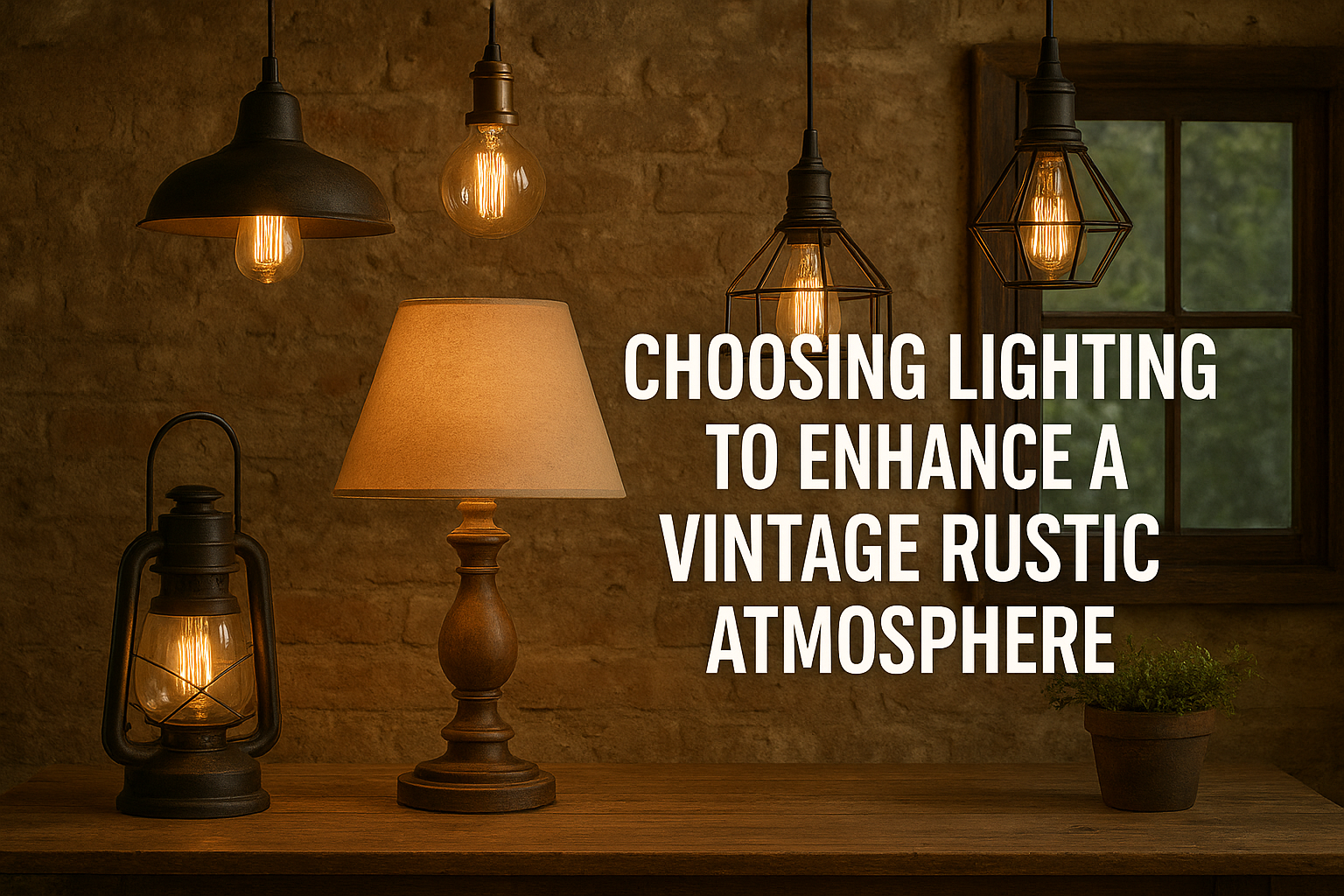
Choosing Lighting to Enhance a Vintage Rustic Atmosphere
Lighting has a way of shaping how we experience space, and when you’re aiming for a vintage rustic atmosphere, the right combination of warmth, texture, and subtle drama is essential. The goal is to create layers of light that feel handmade and timeworn, while still offering practical brightness for daily use. Here’s how to design a lighting plan that elevates a vintage rustic vibe without feeling fussy or artificial.
Core principles to guide your choice
– Layered lighting: Combine ambient, task, and accent lighting to sculpt the room. Ambient lighting provides overall visibility with a warm glow, task lighting helps with specific activities, and accent lighting draws attention to focal features like a reclaimed timber beam, a stone fireplace, or an antique cabinet.
– Warmth and texture: Prioritize color temperatures in the warm range (roughly 2700K to 3000K). The glow should feel like candlelight or late-afternoon sun, not a clinical, cool white.
– Dimming is your friend: Dimmable fixtures let you shift the mood from bright daytime to cozy evenings. A simple dimmer on ceiling and wall fixtures goes a long way.
– Authentic materials with timely safety: Favor materials that evoke rustic charm—wrought iron, brass, antique copper, weathered wood, and artisan glass—paired with modern electrical components for reliability and safety. Aim for UL listing and appropriate ratings for the room (damp-rated fixtures for bathrooms or outdoor-adjacent areas).
Fixture styles that fit a vintage rustic mood
– Edison-style filaments and amber glass: Filament bulbs with warm amber filaments emit a nostalgic glow that evokes early electric lighting. Pair them with warm metal finishes for a timeless look.
– Lanterns and cage fixtures: Classic lantern pendants, gooseneck barn lights, or metal cages around bulbs add rustic character and a sense of history.
– Wrought iron, brass, and aged finishes: Fixtures in wrought iron, aged brass, copper, or distressed black finishes feel of a bygone era while aging gracefully with the space.
– Mason jars and tabletop lanterns: Small-scale accents in mason jars, blown glass, or ceramic lanterns can soften a large room and introduce tactile, handcrafted texture.
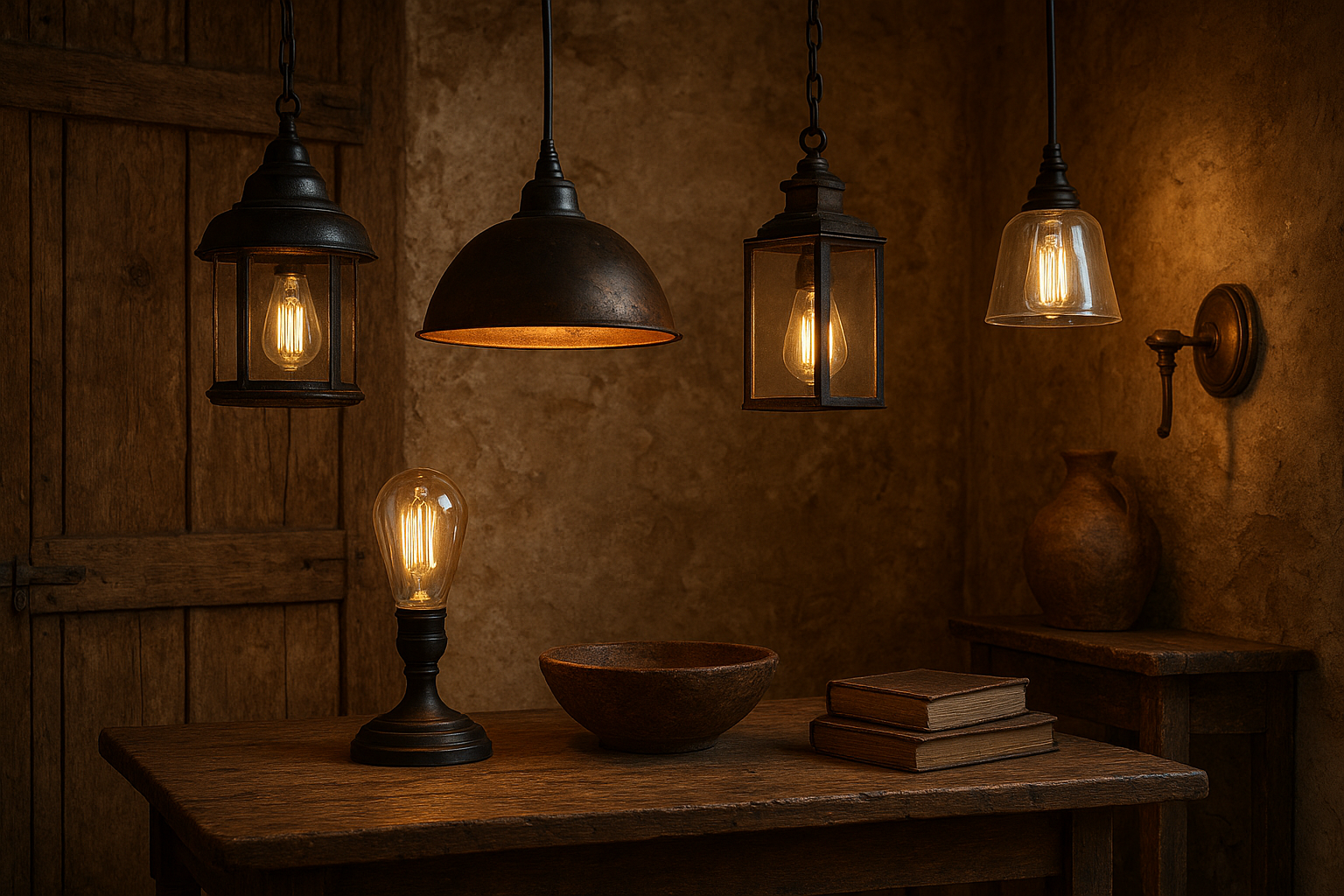
– Natural materials: Wood-trimmed fixtures, stone bases, or fabric-wrapped shades can integrate with rustic architecture and expose the craftsmanship behind the design.
Choosing the right color temperature and brightness
– Warm vs cool: For a vintage rustic feel, lean into warm whites rather than daylight or cool white. This makes woods, textiles, and metals read as inviting and cozy.
– Layer brightness: Avoid one overpowering source. A ceiling fixture can provide diffuse ambient light, while wall sconces and table lamps offer lower, intimate pools of light. This layered approach prevents glare and flat lighting.
– Consider the scale: In a large, rustic room with timber beams and stone features, use multiple fixtures with lower wattage/low-lumen bulbs to create a soft tapestry of light rather than a single bright source.
Practical layout ideas by space
– Living room or family room: Install a central ceiling fixture with a warm glow for general illumination. Place wall sconces on either side of a focal piece (fireplace, framed artwork) to frame the space. Add floor lamps near seating for reading and coziness, ensuring the lampshades or shades diffuse light softly.
– Dining room: A statement pendant or chandelier above the table sets the mood. Choose one large fixture or a trio of smaller pendants with warm finishes. The light should illuminate the table evenly without glare, creating a welcoming glow for gatherings.
– Kitchen and dining nooks: Pendant lighting above an island or breakfast bar in rustic metal finishes pairs well with under-cabinet lighting for task needs. Consider open cabinet lighting to highlight textures like brick or open shelving.
– Entry and hallways: A single vintage-inspired lantern or a small chandelier can establish the theme as soon as you walk in. Use wall sconces along hallways to guide the eye and provide gentle, consistent illumination.
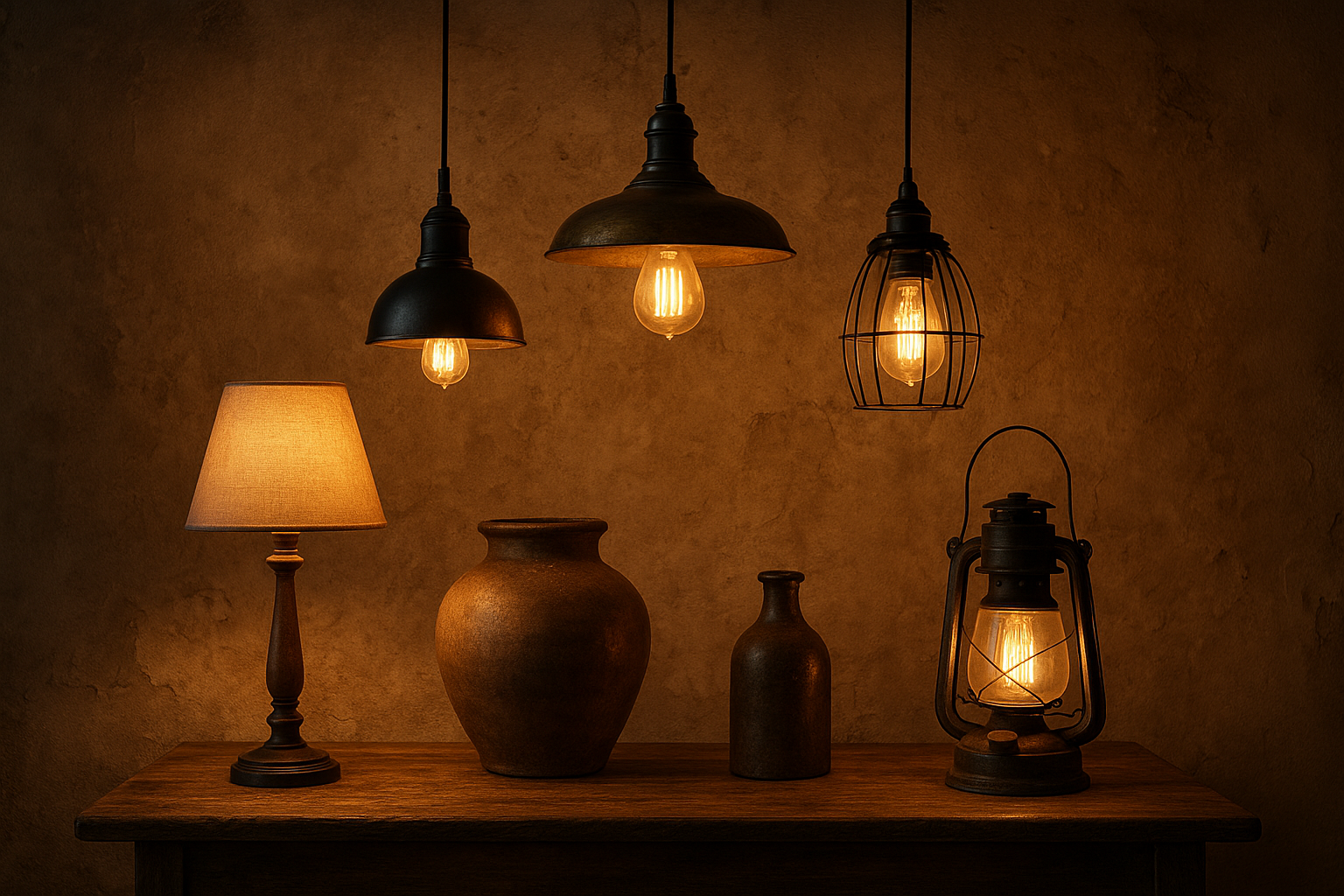
– Bedroom: Bedside lamps with fabric or linen shades in warm finishes create softness. A ceiling light with a dimmable warm bulb keeps the room versatile, from morning routines to evening reading.
– Bathrooms (if mixing rustic with vintage): Choose fixtures with warm tones and weathered finishes, but ensure moisture-rated (wet or damp-rated as required) bulbs and guards. Simple sconces on either side of a mirror give a classic look without harsh shadows.
Tips for authenticity without sacrificing practicality
– Mix old and new thoughtfully: Use newer, energy-efficient bulbs inside vintage-looking fixtures or combine a small antique piece with modern LEDs. This preserves the look while improving energy use and safety.
– Pay attention to scale and proportion: Rustic spaces often have large, chunky elements. Choose fixtures that balance the room’s mass—oversized pendants for a high ceiling, or compact lanterns on a narrow wall.
– Textures matter: A fixture’s shade or glass can carry texture as much as its metal. Opt for bell-shaped or conical shades in parchment, mica, or frosted glass to catch the room’s textures—woven rugs, rough-hewn wood, stone, and leather.
– Lighting in layers with texture: Lampshade textures, metal finishes, and glass patterns reflect light in distinct ways, adding depth to a rustic space. Layered textures keep shadows soft and inviting rather than stark.
– Details that tell a story: A fixture with visible screws, rivets, or riveted joints can read as industrial vintage. A patina on metal gives warmth and character, aging gracefully with your space.
Maintenance, safety, and energy considerations
– LED options with vintage look: Filament LEDs provide long life and efficiency while preserving the antique warmth. They’re safer and more durable for everyday use than old incandescent bulbs.
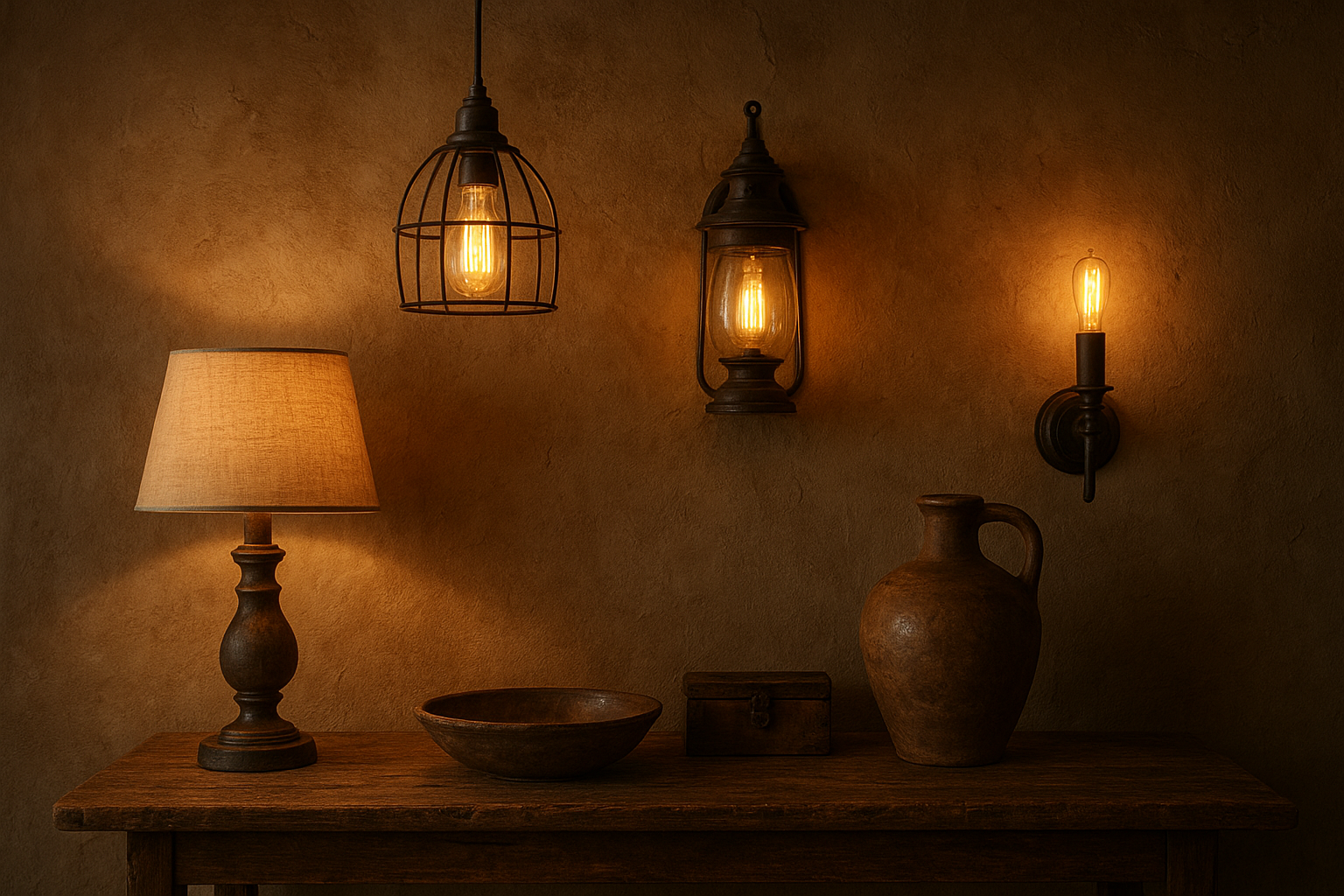
– Dimming and switching: Install dimmers where you want mood control. If you have multiple zones, consider a smart dimmer system for scheduling and remote control.
– Structural and electrical checks: Ensure ceiling mounts and wall brackets are rated for the weight of heavier rustic fixtures. Have a professional verify wiring, especially in older homes, to prevent safety hazards.
– Cleaning and care: Dust fixtures regularly to maintain glow and prevent buildup from dulling the finish. Use a soft cloth for metal surfaces and gentle cleaners recommended by the finish type.
A few quick, practical setup ideas
– Create a focal point: A single, well-chosen pendant above a rustic dining table or kitchen island can anchor the room.
– Layer with intent: Pair a ceiling fixture with two or three wall sconces or table lamps so you can tailor the light level for different activities and moods.
– Play with color accents: Bronze, brass, or copper tones catch and reflect light warmly, especially when paired with natural wood, stone, and linen textiles.
– Use mirrors wisely: A small, well-placed mirror can reflect warm light and visually expand a cozy space without compromising the rustic vibe.
In sum
Choosing lighting for a vintage rustic atmosphere is about balancing warmth, texture, and practicality. By layering light, selecting fixtures in weathered finishes, and embracing warm color temperatures, you can create spaces that feel both lived-in and timeless. With careful planning, your lighting not only illuminates but also enhances the story of the room—the soft glow of remembered places and simpler times, made comfortable for modern living.